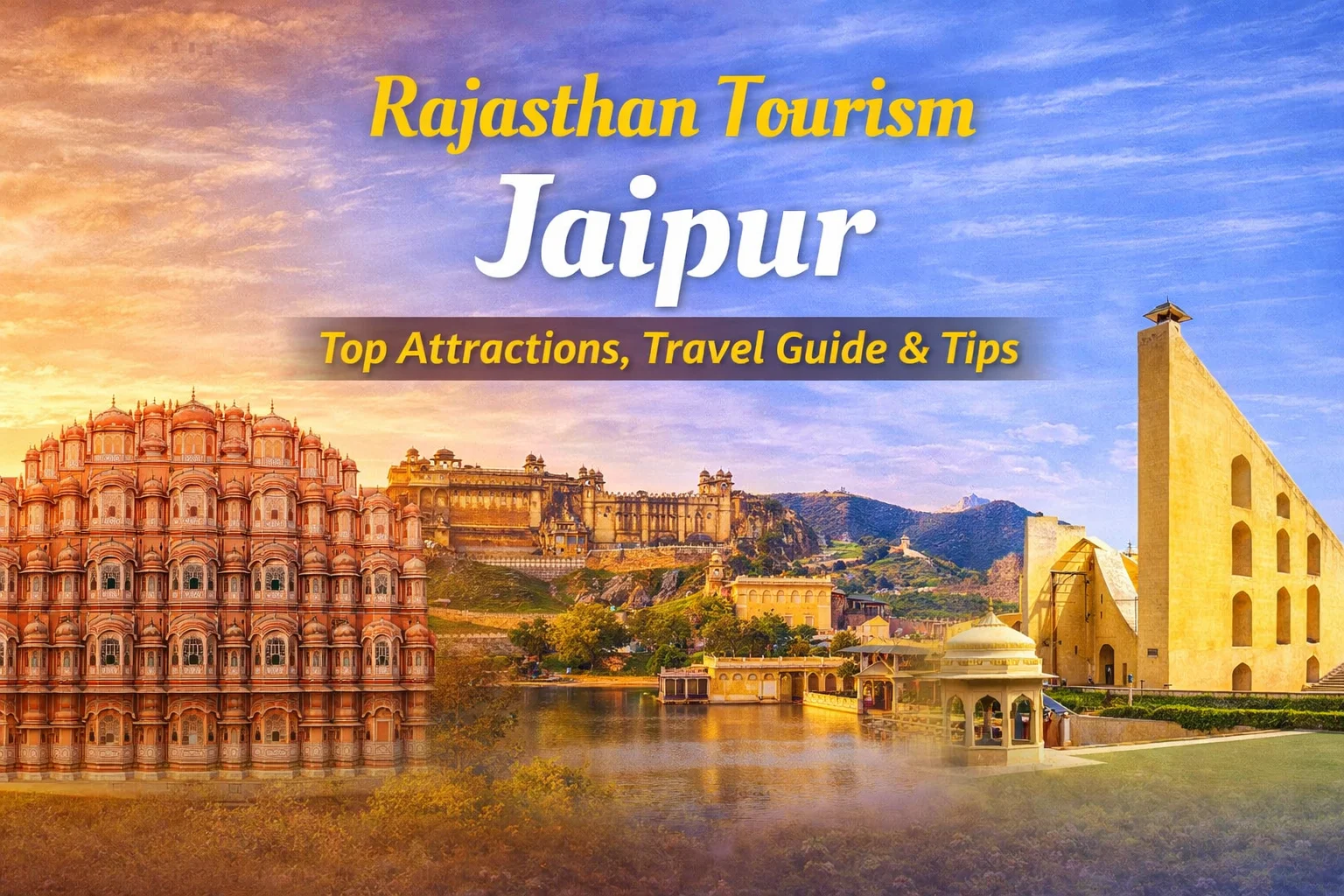
Rajasthan Tourism Jaipur showcases the royal charm of Jaipur with its grand forts, palaces, and vibrant culture. From Amber Fort to Hawa Mahal, the city offers a perfect blend of history, heritage, and local experiences.
overview
Jaipur is among the most significant destinations of Rajasthan Tourism Jaipur where one can find a perfect combination of royal heritage, its colorful cultural background and architectural heritage. Jaipur, also referred to as the Pink City, was established in 1727 by the Maharaja Sawai Jai Singh II and is renowned by its organized structure, historical fortifications, magnificent palaces and vibrant bazaars. The city is an embodiment of the culture of Rajput rulers with great monuments and its traditional way of living.
Among the best known sites which bring out the Rajasthan Tourism Jaipur are Amer Fort, City Palace, Jaipur, Hawa Mahal, and Jantar Mantar, Jaipur. Besides historical attractions, tourists are able to visit local markets, food, and local art and craft. Jaipur is a hub of excellent connectivity by air, rail and road that make it an entry point to other renowned places in Rajasthan by travelers. One of the main attractions of Rajasthan tourism in Jaipur can be experienced through Rajasthan Tour and Packages. The rich heritage and cultural appeal can be experienced to the peak.
TOP PLACES TO VISIT IN JAIPUR
Amer Fort
Amer Fort is considered to be one of the greatest forts within Rajasthan and a major illustration of the Rajput architecture. The fort which was constructed in the late 16th century by Raja Man Singh I was the prime residence of the Kachwaha Rajput rulers until the inception of Jaipur city. The fort is made of red sandstone and marble and is situated on a hill looking at Maota Lake.
Within the fort, one can see beautiful court yards, large halls, and royal rooms which show the luxurious way of life of the Rajput kings. Among the most recognizable of them is the Sheesh Mahal (Mirror Palace) in which there are thousands of small mirrors which reflect light and create a miraculous effect. The fort has Diwan-e-Aam (Hall of Public Audience) and Diwan-e-Khas (Hall of Private Audience) in which the royal meetings had been held in the past.
Timings : 8:00 AM - 5:30 PM
Entry Fee : 100 (Indian visitors), 500 (Foreign visitors)
City Palace Jaipur
City Palace, Jaipur is located at the center of Jaipur and is the political and cultural centre of the city when the Kachwaha dynasty was in power. Constructed in the 18 th century by Maharaja Sawai Jai Singh II, the complex of palaces is a mix of the styles of Rajput, Mughal and European architecture.
The palace is separated into multiple courtyards, gardens and constructions all of which are representative of royal design and craftsmanship. The Chandra Mahal is one of the most renowned localities which is still in use as the home of the Jaipur royal family. Mubarak Mahal that now features a museum of royal clothes, weapons, manuscripts, and art of the royal era are also available to the viewer.
The gates are beautifully decorated, particularly the Peacock Gate and this is a fine example of the craftsmen of Jaipur.
Timings : 9:30 AM - 5:00 PM
Entry Fee : 300-500 (Indians) 1000+ (Foreign visitors based on the access areas)
Hawa Mahal
Hawa Mahal is a very recognizable monument and architectural masterpiece of Jaipur. Constructed by Maharaja Sawai Pratap Singh in 1799, the five-story palace was intended to be used by the royal women of the palace to watch the festivals taking place on the streets and see what was happening without being spotted by the rest of the community.
The building is constructed using pink sand stone and it has a peculiar honeycomb design that contains 953 small windows known as jharokhas. These windows permit the entering of the cool air in the palace and that is why it is referred to as the Palace of Winds. This architecture served the purpose of retaining natural ventilation of the building during hot summers.
The visitors are given the opportunity to climb on the narrow ramps within the palace to access the upper floor where they would have beautiful views of the busy markets and historic streets of Jaipur.
Timings : 9:00 AM - 4:30 PM
Entrance Fee : 50 (Indians visitors),200 (Foreign visitors)
Jantar Mantar
Jantar Mantar is among the most interesting scientific monuments in India; it is located in Jaipur. The observatory, constructed by the Maharaja Sawai Jai Singh II, who had a keen interest in astronomy was constructed in the early 18th century to examine the movements within the heavens.
The location has 19 giant astronomical tools that were manufactured using marble and stone. These tools were utilized to determine the time, track stars, and calculate the position of planets as well as predict the occurrence of the eclipses. The most well known is the Samrat Yantra which is the largest stone sundial in the world.
Jantar Mantar is considered a UNESCO World Heritage Site due to its scientific significance and rare design. The instruments are even nowadays very precise in estimating time.
Timings : 9:00 AM - 4:30 PM
Entrance Fee: 50 (Indians visitors), 200 (Foreign visitors)
Nahargarh Fort
Nahargarh Fort is situated in the Aravalli hills, and it was initially constructed by Maharaja Sawai Jai Singh II in the year 1734 as a fortification of Jaipur. It was erected together with Amer Fort and Jaigarh Fort, which made a good protection ring round the city.
The fort was later on turned into a royal holiday resort where kings and queens had time off the hectic city. Madhavendra Bhawan is one of the prime attractions that are located within the fort and it comprises splendidly constructed suites that were constructed to comfort the royal queens.
The Nahargarh Fort is known today as a place where one can have the most stunning panoramic views of Jaipur city. The whole Pink City is lit up under the golden light during the sunset and this is one of the most scenic points of view in Rajasthan to be viewed by visitors.
Timings : 10:00 AM - 5:30 PM
Entrance Fee: 50 (Indians visitors), 200 (Foreign visitors)
These monuments contain the royal heritage and architectural genius that predisposes Jaipur as one of the most significant Jaipur tourist attractions destinations in India. Visiting these historic places will allow tourists to appreciate the expensiveness and cultural diversity of the royal legacy of Rajasthan.
Local Markets and Traditional Handicrafts, Jaipur Culture.
Jaipur is also known for its great forts, palaces, traditional handicrafts, colorful markets and not to mention, the colorful culture. The city replicates the centuries-old traditions that people maintain in their everyday living.
It has been the home of grand festivals and folk dances; handmade textile and jewelry, and Jaipur provides a rich cultural experience to the visitor that depicts the cultural heritage of Rajasthan.
Jaipur and its Culture and Traditions.
This culture is heavily shaped by the culture of Rajasthan and that of Jaipur rulers. The city also has a number of festivals marked by color like the Teej, Gangaur, and Diwali that are celebrated by putting up decorations in the streets and focusing on holding traditional processions. Women are dressed in bright ghagra-choli dresses and men frequently wear colored turban giving a vibrant cultural effect.
There are also traditional folk dances like Ghoomar and Kalbeliya which are used in festivals and cultural programs. Folk music with the usage of such instruments as dholak, harmonium, and sarangi accompanies these dance forms. These performances are generally viewed by tourists in cultural centers and historical hotels.
Most of the cultural events and performances tend to be held in the evening between 6:00 PM to 9:00 PM, particularly in the cultural villages and in the traditional restaurants around Jaipur.
Another aspect of the culture of Jaipur is hospitality. Tourists are also made to feel very welcome and this is evident in the Rajasthani culture of Atithi Devo Bhava which translates to the guest being treated as revered and greatly respected.
Well-Known Jaipur Local Markets.
One of the most admirable shopping places to visit in Rajasthan is Jaipur, which has traditional markets that are full of handicrafts, textiles, jewelry, and souvenirs. Among the most renowned markets is Johari Bazaar that specializes in gemstones, Kundan jewelry as well as traditional ornaments.
The other popular street is Bapu Bazaar where tourists can purchase colored textiles, block-print fabrics, leather shoes (mojari), and handcrafted souvenirs. Lac bangles and traditional metal objects are sold in Tripolia Bazaar whereas marble sculptures and decorative handicraft are sold in Chandpole Bazaar.
The majority of traditional markets in Jaipur work between 10: 00 a.m. to 9: 00 p.m. still some minor shops can take a small break in the afternoon.
Taking a tour around these markets, the visitors are able to feel the original ambiance of the ancient city.
The Conventional Jaipur Handicrafts.
Jaipur is also commonly referred to as the place of traditional handicraft and talented craftsmen who have continued with their craft over the years. Block printing, especially the Sanganeri and Bagru type is one of the most renowned crafts. These fabrics are made with wooden blocks and natural dyes to bring elaborate designs to the cotton fabrics.
Blue pottery is another special craft and it is decorated with beautiful designs in blue and white colors in the ceramic vessels like vases, plates, and decorative tiles. Gemstone cutting and jewelry making are also another form of Jaipur specialty, with the traditional Kundan and Meenakari type of jewelry.
The craftsmen and artisan stores that are usually open between 10:00 AM and 7:00 PM allow the visitors to observe craftsmen working in their workplaces and purchase the authentic handmade products.
These handicrafts reflect the artistic heritage of Jaipur, and it also makes the city one of the highest centers in regard to the traditional art in Rajasthan.
Top Food & Bars to Visit on Jaipur Tourism.
Chokhi Dhani - Rajasthan Dining Experience.
Chokhi Dhani is amongst the most renowned places in Jaipur where the tourists are able to enjoy the traditional culture and taste the authentic Rajasthani food. In the form of a classical Rajasthani village, the location provides tourists with the entire cultural setup of folk dances, puppet shows, camel riding and performance of traditional music.
The best thing about the visit to Chokhi Dhani is the Rajasthani thali, which is taken in a traditional way. The thali typically contains Dal Baati Churma, Gatte Ki Sabzi, Ker Sangri, Bajra Roti, Kadhi, papad, chutneys and traditional sweets, such as Malpua and Ghewar. The food is also served with a lot of hospitality and the guests are also seated in typical seating arrangements rendering them an authentic village dining experience.
Tourists can also have live cultural performances as they eat making the experience unique and memorable.
Timings: 5:00 PM - 11:00 PM
Approx Entry / Dinner Price: 1000 -1200 per person.
Rawat Mishthan Bhandar- Pyaaz Kachori.
Rawat Mishthan Bhandar is the most well known food place in Jaipur, and is particularly popular due to its pyaaz kachori which are deep-fried pastry stuffed with spicy onion mixture. It is a shop that has been serving the locals and tourists over the years and is regarded as a place to visit when one wants to see what Jaipur has to offer in terms of the traditional street snacks.
Besides pyaaz kachori, samosas, kachori chaat and sweets, such as mawa kachori, a pastry made of dry fruits and khoya should be tried. The shop is normally crowded at breakfast time when the natives visit to have the freshly prepared kachoris with the tangy chutneys.
The cozy environment and natural taste of the food make Rawat Mishthan Bhandar a good tourist destination that offers tourists a chance to encounter the local culture of street foods in Jaipur.
Timings: 7:00 AM - 10:00 PM
Specialty: Pyaaz Kachori, Mawa Kachori, traditional sweets.
Laxmi Misthan Bhandar (LMB) - Rajasthan Authentic.
One of the oldest and the most reputed restaurants in Jaipur is Laxmi Misthan Bhandar or LMB which is located in the famous area of Jaipur, the Johari Bazaar. It is famous in serving traditional Rajasthan thali, which comprises traditional foods such as Dal Baati Churma, Gatte Ki Sabzi, Ker Sangri, and Bajra roti.
The restaurant has been known as a place of quality food and traditional recipes over decades. Tourists usually go to LMB not only to take the food but to have its popular sweets like ghewar, rasgulla and mawa kachori.
Eating at LMB offers the tourists an opportunity to experience the original Rajasthani cuisine in a relaxing and historic location within the ancient markets of the city.
Timings: 8:00 AM - 10:00 PM
Specialty: Thali, sweets (Rajasthani specialty).
Street Food Hub in Jaipur - Masala Chowk.
Masala Chowk is an open food court which is situated within Ram Niwas Garden in Jaipur. It is where most of the renowned street food merchants in the city end up under a single roof hence tourists find it easier to sample various dishes within the premises.
There is a great variety of snacks available to the visitors such as chaat, pav bhaji, kulfi, kachori, dosa, and most of the local cuisine. As there are various food stands, there is an option to taste a diversity of flavors without going to various places in the city.
Masala Chowk is particularly a popular place during the evening where locals and tourists throng here to have a taste of street food in a well organized and clean atmosphere.
Timings: 8:00 AM - 10:00 PM
Entry Fee: Around 10 per person
Tapri Central - Culture of Tea and Snacks.
Tapri Central is another popular cafe in Jaipur which reflects the contemporary culture of tea and snacks in the city. It has gained popularity amongst the locals and the tourists who wish to have traditional Indian tea as well as light snacks in a comfortable environment.
The cafe also offers different types of teas and other snacks, including bun maska, pakoras, sandwiches, and light meals. The cafe is a good place where many tourists can spend time when they are in Jaipur city since it offers them a comfortable environment to unwind and have a good meal.
Its rooftop seating and casual environment are some of the reasons why it is popular among travelers seeking a contemporary cafe environment in Jaipur.
Timings: 7:30 AM - 10:00 PM
Specialty: Chai, snacks, casual food.
Rajasthan Tourism Jaipur Best Time To Visit Jaipur.
Jaipur has become a leading tourist site in Rajasthan tourism and it draws tourists both from India and other countries. Seasons vary in the city over the year and when you visit the city, it can significantly improve the travel experience. Sightseeing, desert trips and wildlife tours are also influenced by weather conditions in the nearby areas. The following is an organized guide on how travelers can know the best time to visit Jaipur and how to get to the city using various means of transport.
Winter Season (October-March)
Jaipur has been believed to be the most favorable place to visit during the winter period since the climate is favorable and very favorable in the exploration of the forts, palaces, and even when visiting the markets. The daytime temperatures normally lie between 10degC and 25degC hence sightseeing is easy.
This is a good time when visitors tour such major attractions as Amer Fort, City Palace, Hawa Mahal and Jantar Mantar without having to endure the excessive heat of the summer season. A lot of festivals like Jaipur Literature Festival and other cultural fairs are held during winter which also attract international tourists.
It is also the peak season of the year due to the pleasant weather conditions, thus it is advisable to book a hotel and travel tickets in advance.
Summer Season (April to June) - Hot and Less Crowded.
Jaipur is hot in summer and the temperatures may go as high as 40degC to 45degC. Midday sightseeing is not an easy task because the sun is very bright and hot.
Nevertheless, this season can be appropriate with those tourists who like fewer crowds and lower hotel prices. During summer it is advisable to do sightseeing early in the morning and evening.
Monsoon Season (July to September) - Relaxational and Low Cost.
There is occasional rainfall in Jaipur brought by monsoon which lowers the temperature and makes the hills surrounding it greener. The temperatures are typically between 25degC and 35degC.
The season is not as congested as in winter and is therefore a good choice of those with a tight budget. The monuments within the city are also pretty after it has rained and provide excellent opportunities to get photographs.
Best Travel Connectivity to Reach Jaipur
Jaipur is also linked to the major cities by air, rail and road transport hence the ease of movement by the travelers to the city.
By Air – Fastest Way to Reach Jaipur
| Details | Information |
| Airport Name | Jaipur International Airport (JAI) |
| Distance from City | ~13 km |
| Connected Cities | Delhi, Mumbai, Bangalore, Hyderabad |
| Airfare (Approx) | Delhi: ₹2500–₹5000 Mumbai: ₹4000–₹7000 |
| Airport Transfer | Taxi/Cab: ₹400–₹700 |
Jaipur International Airport is the main gateway for air travelers. It is well-connected to major Indian cities with regular domestic flights. After landing, taxis and app-based cabs are easily available to reach your hotel or explore the best places to visit in Jaipur comfortably.
By Train – Budget-Friendly & Convenient
| Details | Information |
| Main Station | Jaipur Junction (JP) |
| Nearby Station | Gandhinagar Jaipur |
| Connected Cities | Delhi, Agra, Mumbai, Ahmedabad |
| Ticket Price (Approx) | Sleeper: ₹300–₹400 3AC: ₹700–₹1200 2AC: ₹1200–₹2000 |
Jaipur Junction is one of the busiest railway stations in Rajasthan and connects the city with all major destinations. Train travel is affordable and comfortable, making it a popular choice for tourists planning to visit the best places to visit in Jaipur.
By Train – Budget-Friendly & Convenient
| Details | Information |
| Main Station | Jaipur Junction (JP) |
| Nearby Station | Gandhinagar Jaipur |
| Connected Cities | Delhi, Agra, Mumbai, Ahmedabad |
| Ticket Price (Approx) | Sleeper: ₹300–₹400 3AC: ₹700–₹1200 2AC: ₹1200–₹2000 |
Jaipur Junction is one of the busiest railway stations in Rajasthan and connects the city with all major destinations. Train travel is affordable and comfortable, making it a popular choice for tourists planning to visit the best places to visit in Jaipur.
What Not to Do When Travelling in Jaipur.
Jaipur is a culturally good and beautiful city yet just as any other tourist attraction center, there are few things that should be taken into consideration by the tourists so as to have a smooth and respectful experience. Being aware of what to avoid may assist the visitors to prevent the most frequent issues and experience their vacation without inconveniences.
Do Not Ignore Local Customs
Jaipur is a place with good cultural and traditional values. Dress conservatively and act in a respectful manner when attending temples, forts or even localities. Very revealing attires should not be worn in places of worship.
Bargain Not in Markets Rude.
There are some well-known local markets, including Johari Bazaar and Bapu Bazaar, where people are known to shop. Negotiation is normal but it ought to be in a polite manner. It is disrespectful to be rude or aggressive towards the shopkeepers.
Never Trust Unofficial Tour Guides.
There is a possibility that some individuals can approach tourists and sell them guide services around monuments. Only licensed guides should be employed or some of the bookings to reputable travel agents should be done to avoid frauds.
Littering in Heritage Areas
There are numerous historic sites and monuments of Jaipur. Tourists ought not to litter the streets but assist in maintaining such areas clean .Do Not Travel Without Water.
Jaipur is a hot place, particularly during the months of April-June. Always carry water and do not spend much time outdoors in the afternoon.
Do Not forget to Check the prices first before services.
It is better to ask about the price in advance to take a taxi, camel riding, or purchase items from street sellers to avoid misunderstandings in the future.
Do Not Rush Your Sightseeing
Jaipur is a city with a lot to see including forts, palaces, markets, and culture. Attempting to cover it all within a short period of time can cause the trip to be stressful. Pace your tour and visit the city at a relaxed pace.
These few tips will help the travelers to have a safe and enjoyable experience when discovering the beauty and culture of Jaipur.
Conclusion
One of the most typical sights in Jodhpur which helps to reflect the royal legacy of Rajasthan is Umaid Bhawan Palace Museum. The palace was constructed in 1928-1943 by Maharaja Umaid Singh and it is one of the biggest personal houses in the world. One section of the palace has been turned into a museum that exhibits royal artifacts like old clocks, photographs, weapons as well as vintage cars that the royal family used.
The museum offers visitors an opportunity to get to know more about the royal dynasty and lifestyle of Jodhpur. The palace is also a combination of an Indo-Deco style and therefore a must visit site to the history lover.Whether you are a history lover, cultural explorer or a first time visitor of Rajasthan tourism Jaipur provides a complete travel experience with the help of local expertise and guidance of Rajasthan Tour and Packages which is been carried on from last 15 years